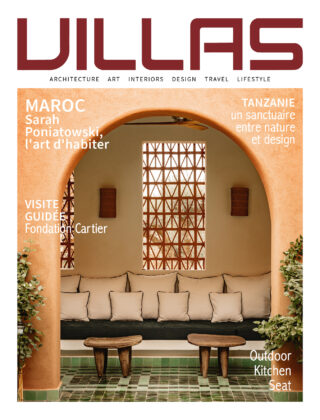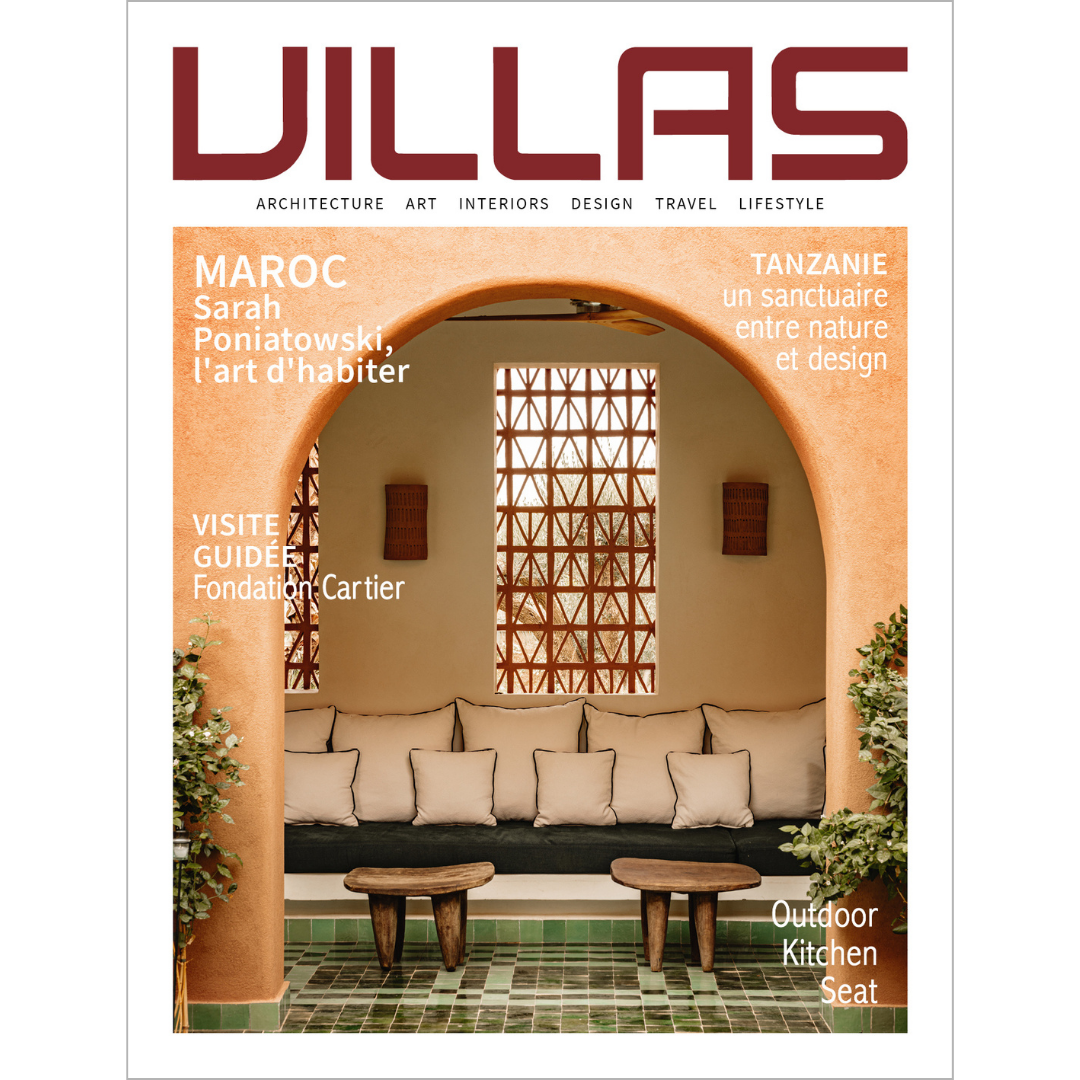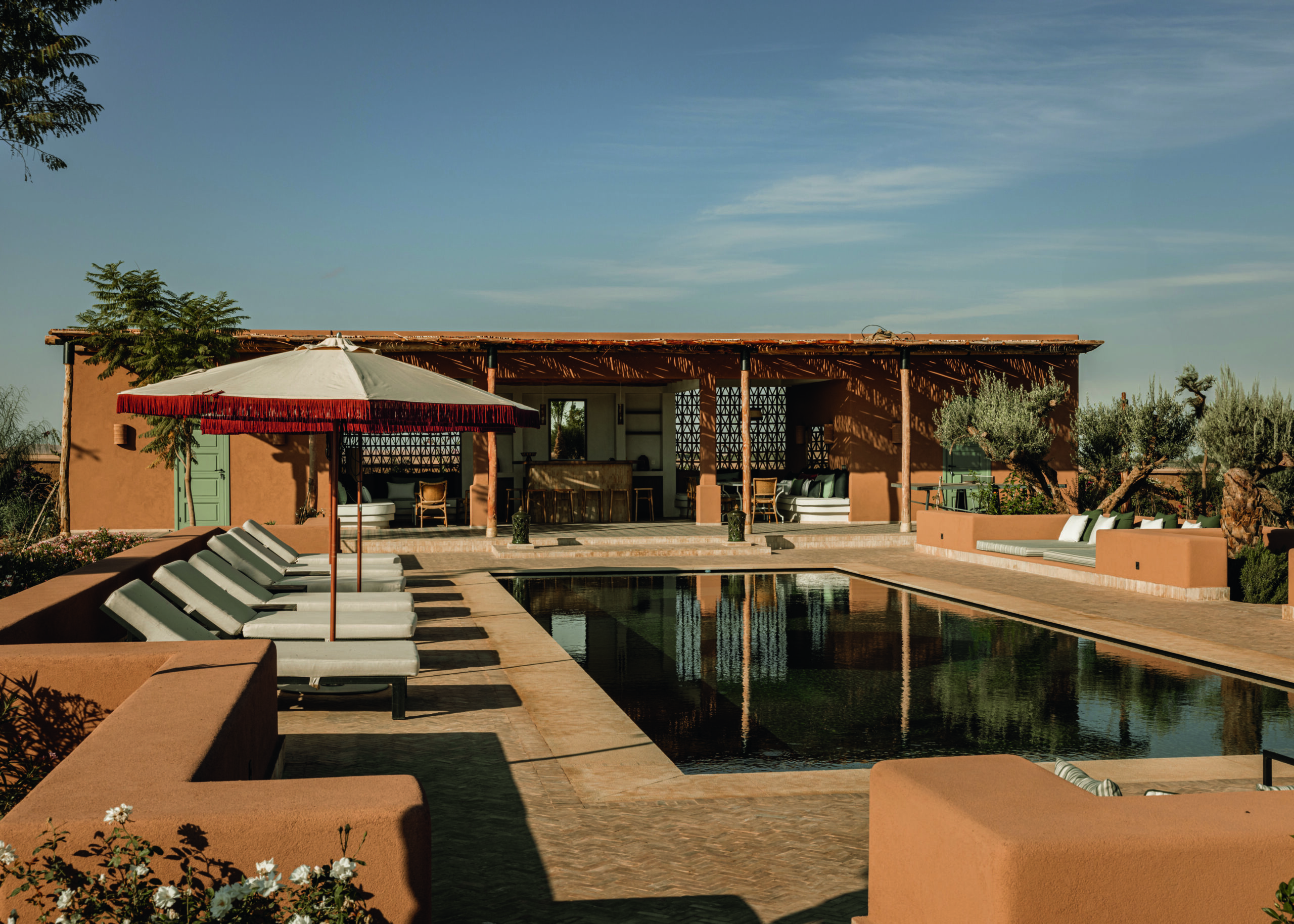
Designed in a sophisticated architectural style, with due consideration for the effects of light, climate and durability, this villa is much more than a residence. It has all the makings of a study into the art of living; a refuge, designed as a place to bring people together, to share moments and impart a culture, capable of accompanying the passage of time without ever seeking to freeze it. The decision to build rather than to renovate was a cornerstone of the project. In Marrakech, a city where existing buildings are often steeped in history, Sarah Poniatowski felt the need to start from scratch to create a home that perfectly reflected her lifestyle. The virgin land thus became a space for projection and freedom, making it possible to precisely orchestrate the relationship between the home, the landscape and everyday uses. The site boasts a rare quality: a panoramic, almost 180 degree view of the Atlas Mountains. This majestic presence, a constant on the horizon, guided the house’s location and orientation. The volumes seek to capture the softness of the sun while protecting against its excesses.
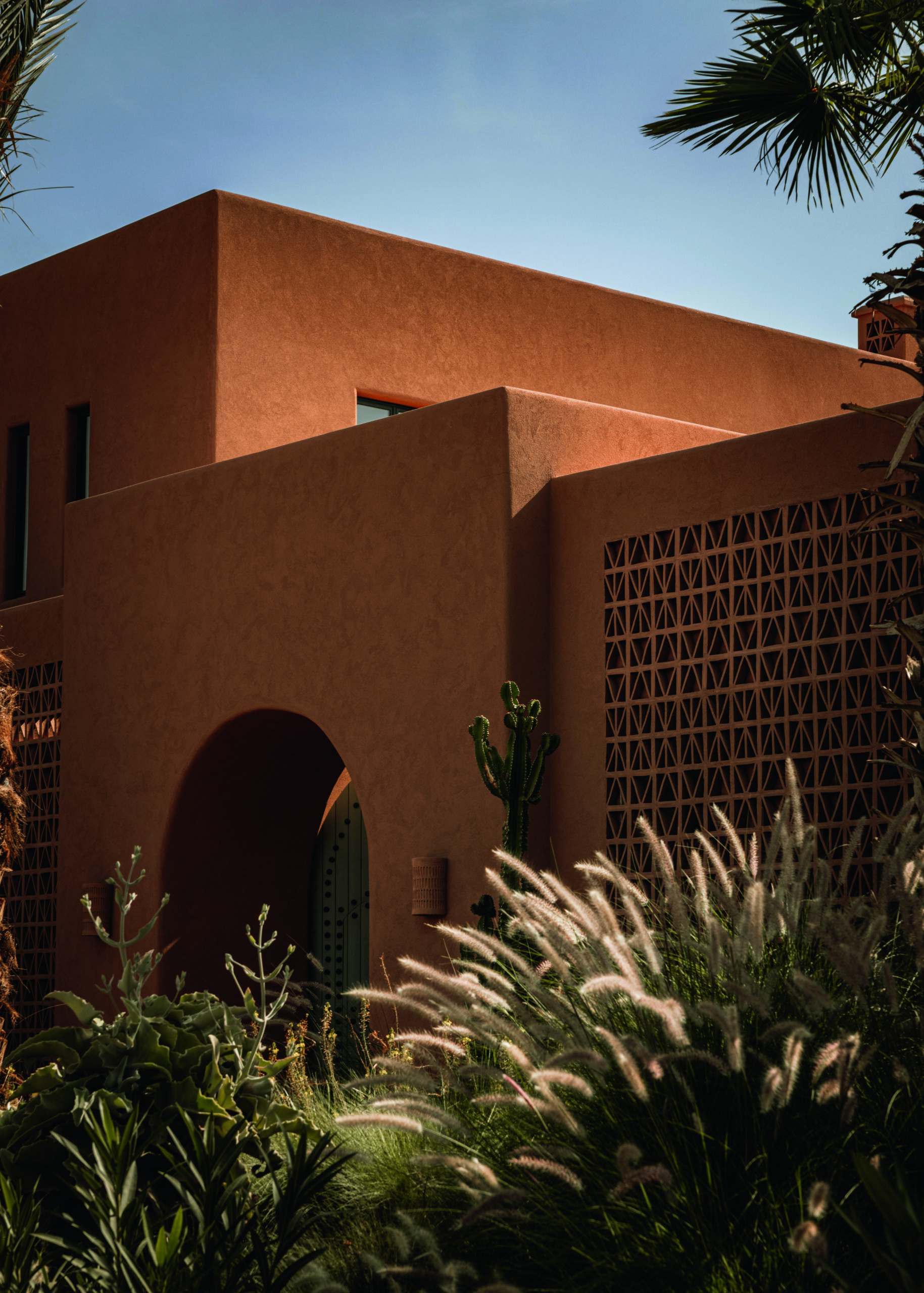
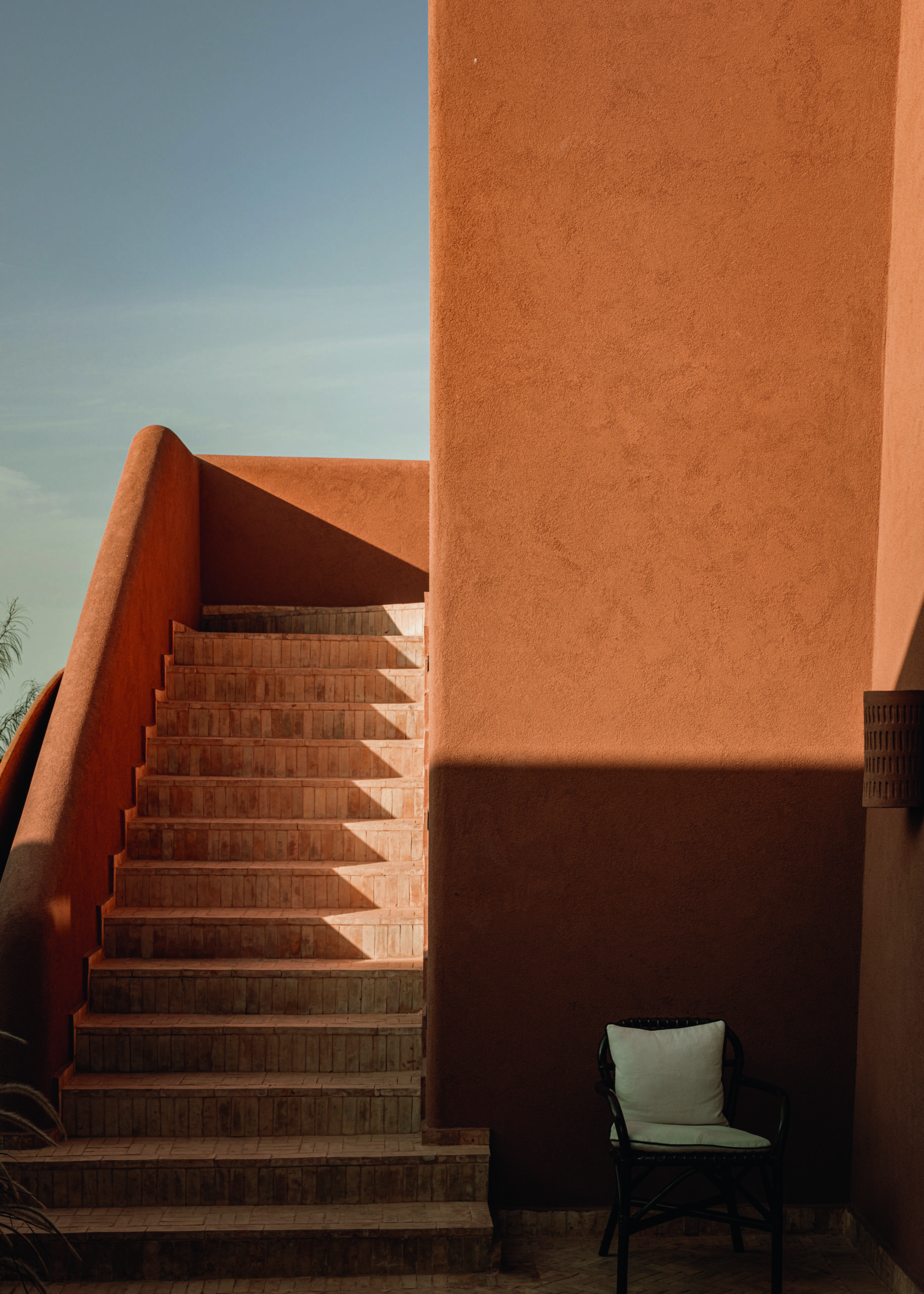
From the very first sketches, the villa was designed with simplicity in mind. The volumes are clear, legible, articulated around the right proportions and fluid circulation. The project was developed in close collaboration with EH Architectes, whose involvement helped to give a rigorous structure to this sensitive and deeply embodied vision. Based on a constant and respectful dialogue and mutual trust, this collaboration made it possible to finely articulate the architectural dimension and the more intuitive approach to interior design. The project managers designed the framework and volumes while Sarah Poniatowski’s input weighed heavily on the design of the layout, the hierarchy of spaces, and the relationship between materials and light. This collaborative effort resulted in a house where the coherence is tangible and where the structure and decoration never clash but effectively complement each other.
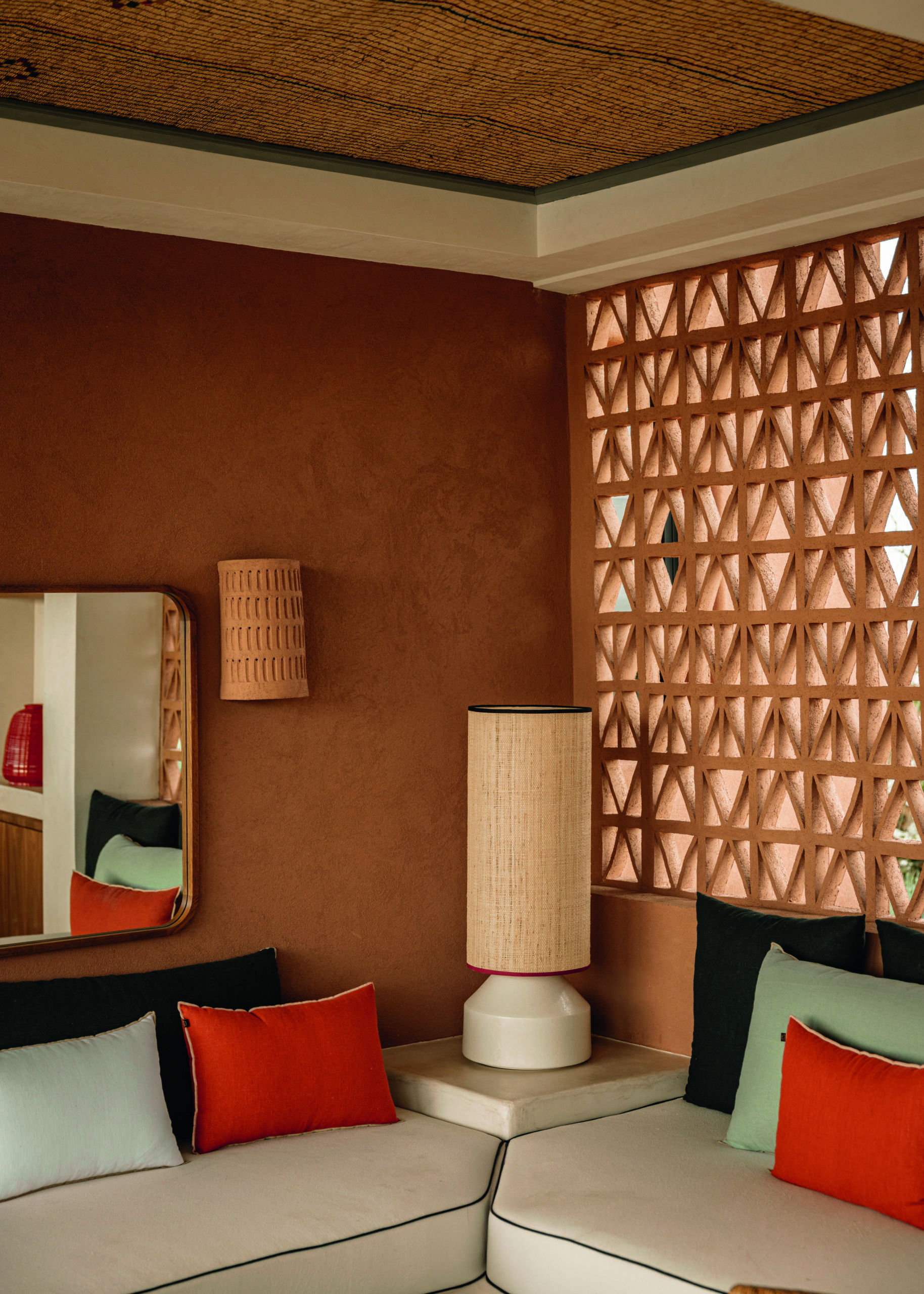
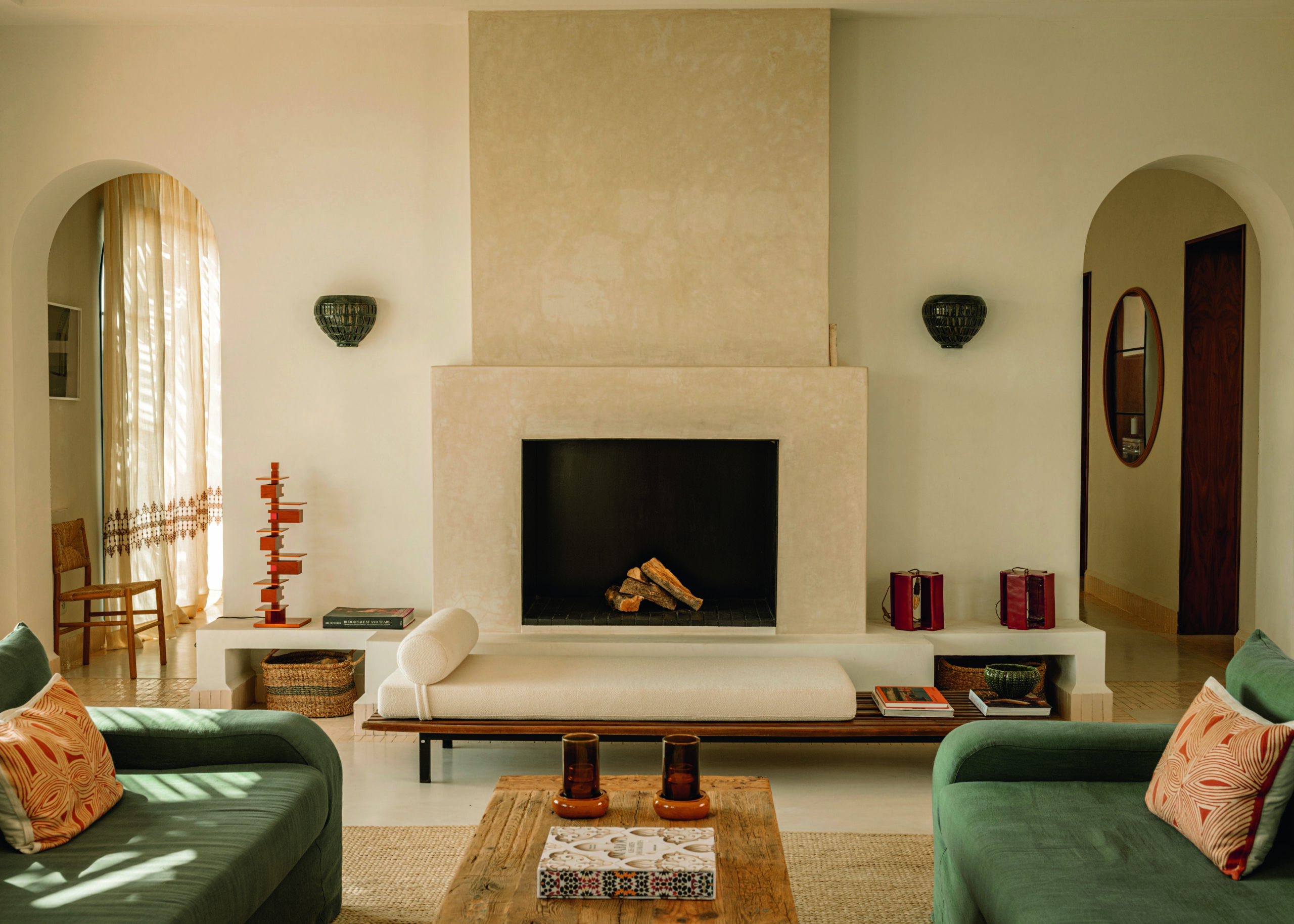
The atmosphere conveyed by the house draws on a range of materials chosen for their authenticity and ability to stand the test of time. The mineral coatings, Zellige, cement tiles, terrazzo and wood are all surfaces that interact with the light and, as the sun moves through the day sky, reveal a wealth of textures and nuances. These materials are never simply decorative but are essential elements in curating the serenity and permanence that emanates from the surroundings. There is nothing random about the choice of resources, as they are aligned with the contemporary interpretation of the Moroccan context, respectful of its know-how without ever succumbing to excessive quaintness. The house asserts a deliberate sobriety, leaving it to the textures and patinas to tell a story, that of a place destined to be lived in and transformed by time. In Marrakech, architecture cannot ignore the climatic dimension. The villa was designed as an open space, where patios, terraces and large openings naturally extend the interior spaces. The boundary between inside and outside is blurred to foster an intuitive continuity, in keeping with the rhythms of the day and the seasons.
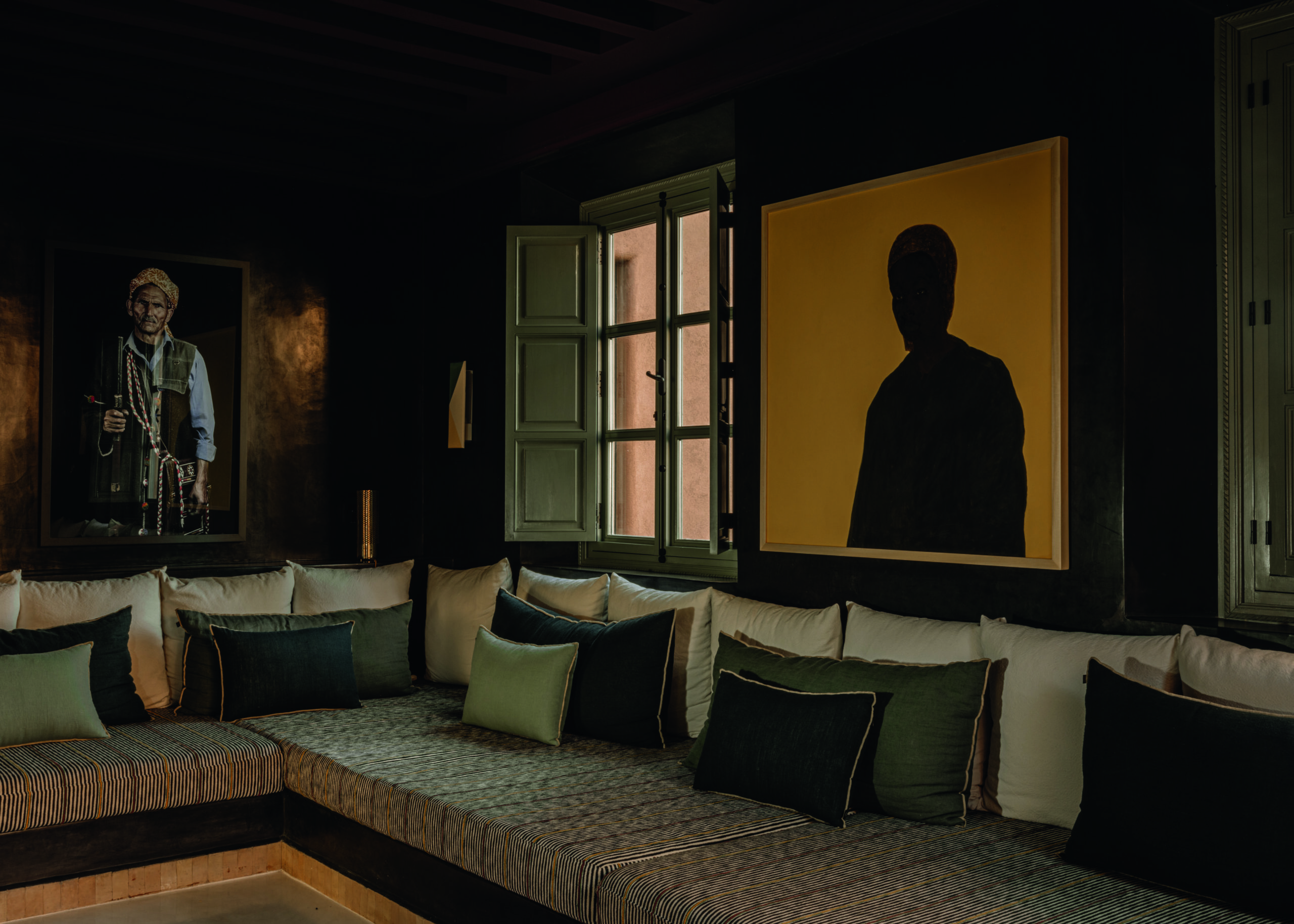
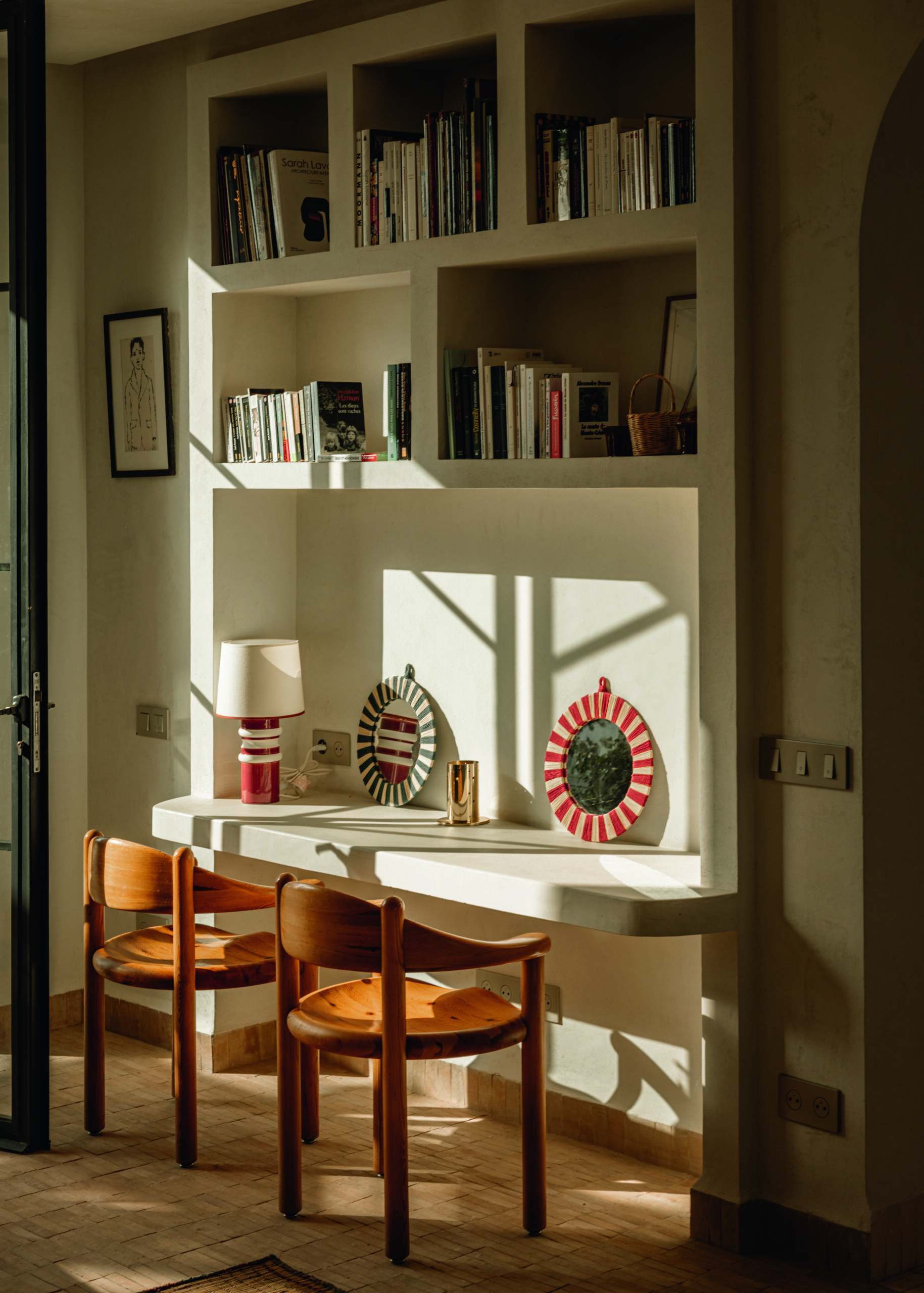
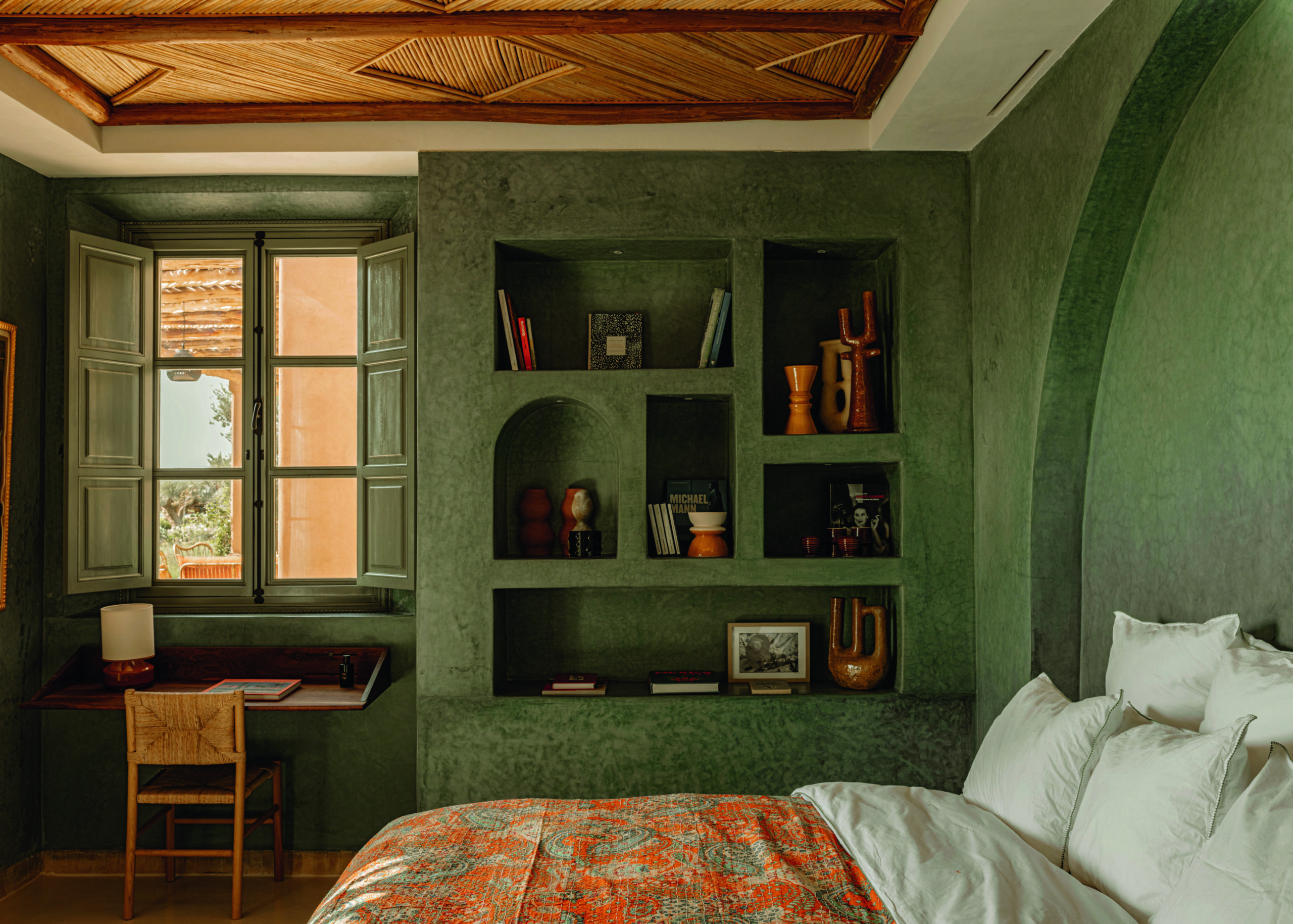
The structure is intentionally uncluttered. It is a space that becomes a showcase for objects that carry meaning: works chosen for specific locations, photographs from a personal collection, furniture found at flea markets, Saint-Ouen in particular. These pieces, often linked to memories, anchor the house in an intimate history. This project marks a far-reaching departure from Sarah Poniatowski’s professional work. Being her own client opens up a rare margin of manoeuvre for the designer, that of trial and error, a licence to start over. It is an almost jubilant freedom that allows for a heady boldness and intuition. Today, this villa has become an essential base for the family. A residence designed to last and to welcome loved ones in its embrace. As the project evolved, the house started to voice its own ideas about living space, suggested rather than imposed by the architecture.
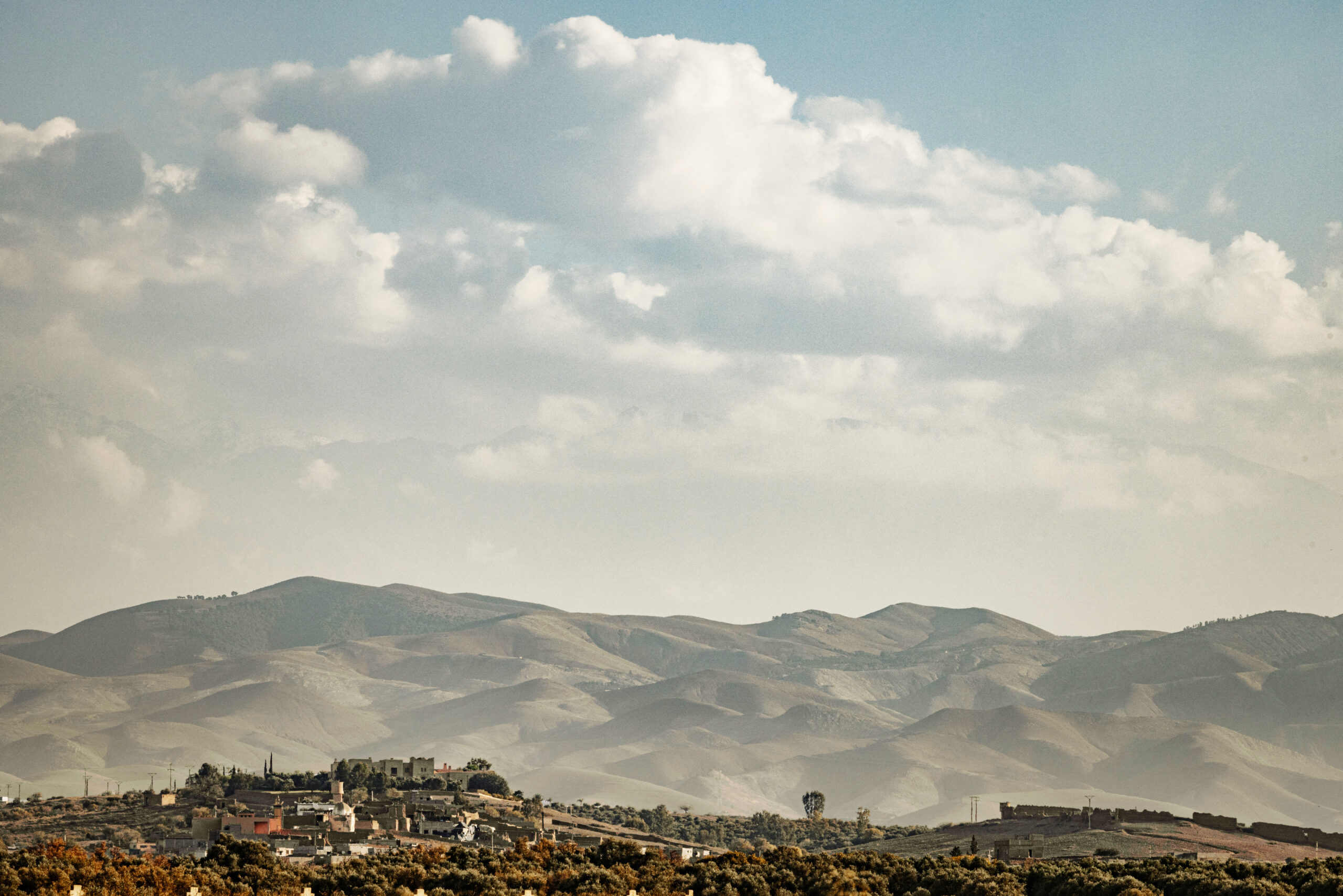
Facing the Atlas Mountains, under the changing light of Marrakech, Sarah Poniatowski’s house can be held up as a vision of living where the construction is at the service of life. It presents a framework that supports uses without foisting them on the inhabitants, and embraces everyday life in all its diversity, allowing for togetherness and alone time. Marrakech is a unique destination, where the climate and perception of time profoundly influence lifestyles, spawning an architecture built in response to the contrasts of the city, with measure and discernment. With its gardens, patios and unobstructed views of the mountains, the house captures what makes the Red City so appealing: a rare ability to combine intensity and tranquillity. It offers a way of life rooted in the destination, designed to blend harmoniously with its landscape and atmosphere.
Our vision of the house is very much coloured by the work of Karel Balas, a passionate self-taught artist whose photographs lie at the intersection of editorial imagery and visual storytelling. After working for many years as an art director in magazine publishing before turning his sights to photography, he approaches places intent on transcending reality and with a keen attention to detail. His images seek to capture a presence, a perfect balance between architecture, light and everyday life. In Marrakech, his work restores the house to its lived-in state, revealing its volumes, materials and circulation through a light that reveals textures without freezing them. This take on the project shows the villa not as a setting but as a genuine, inhabited space, traversed by time and by its inhabitants, and this is very much where his talent lies.
Photography: © Karel Balas