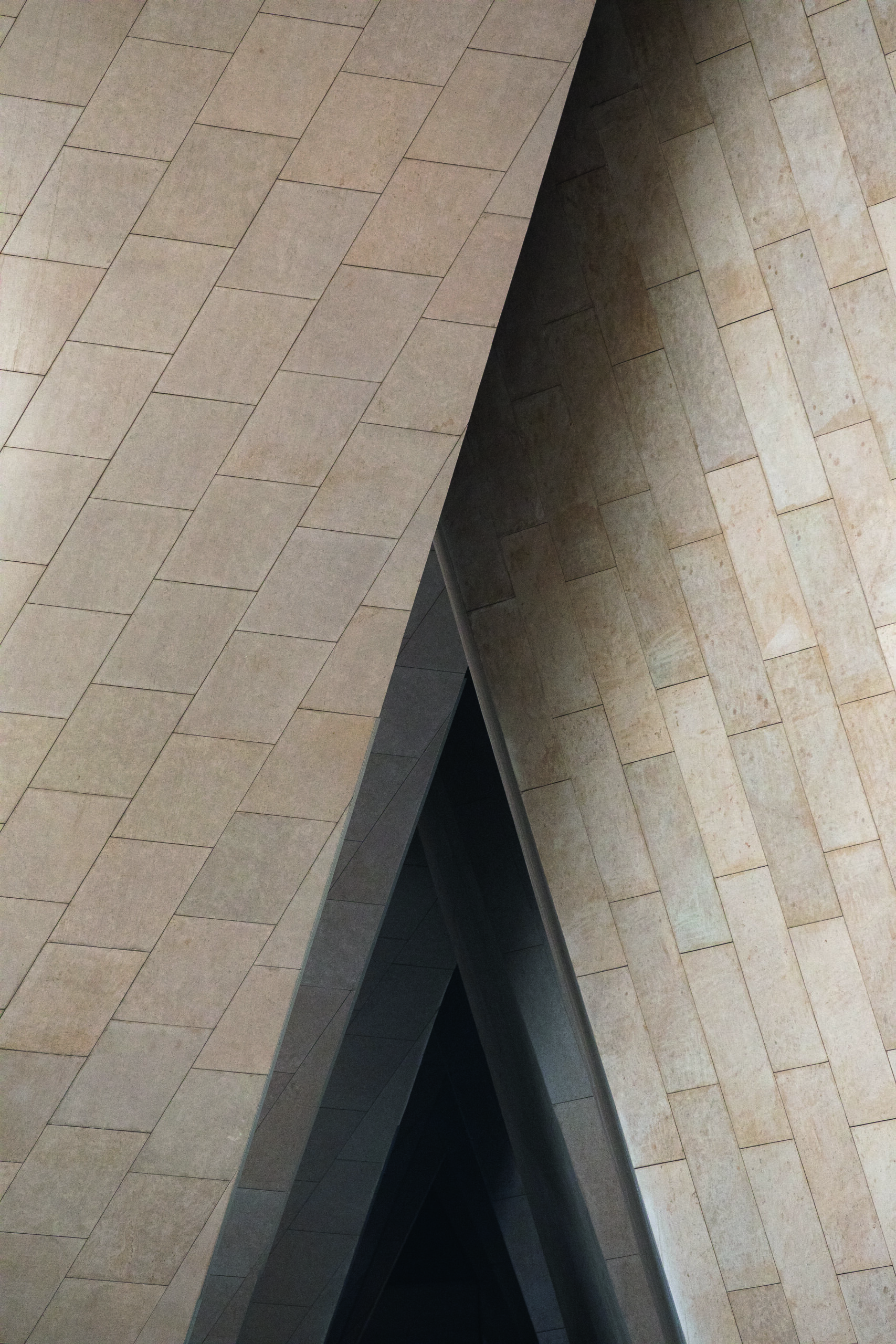
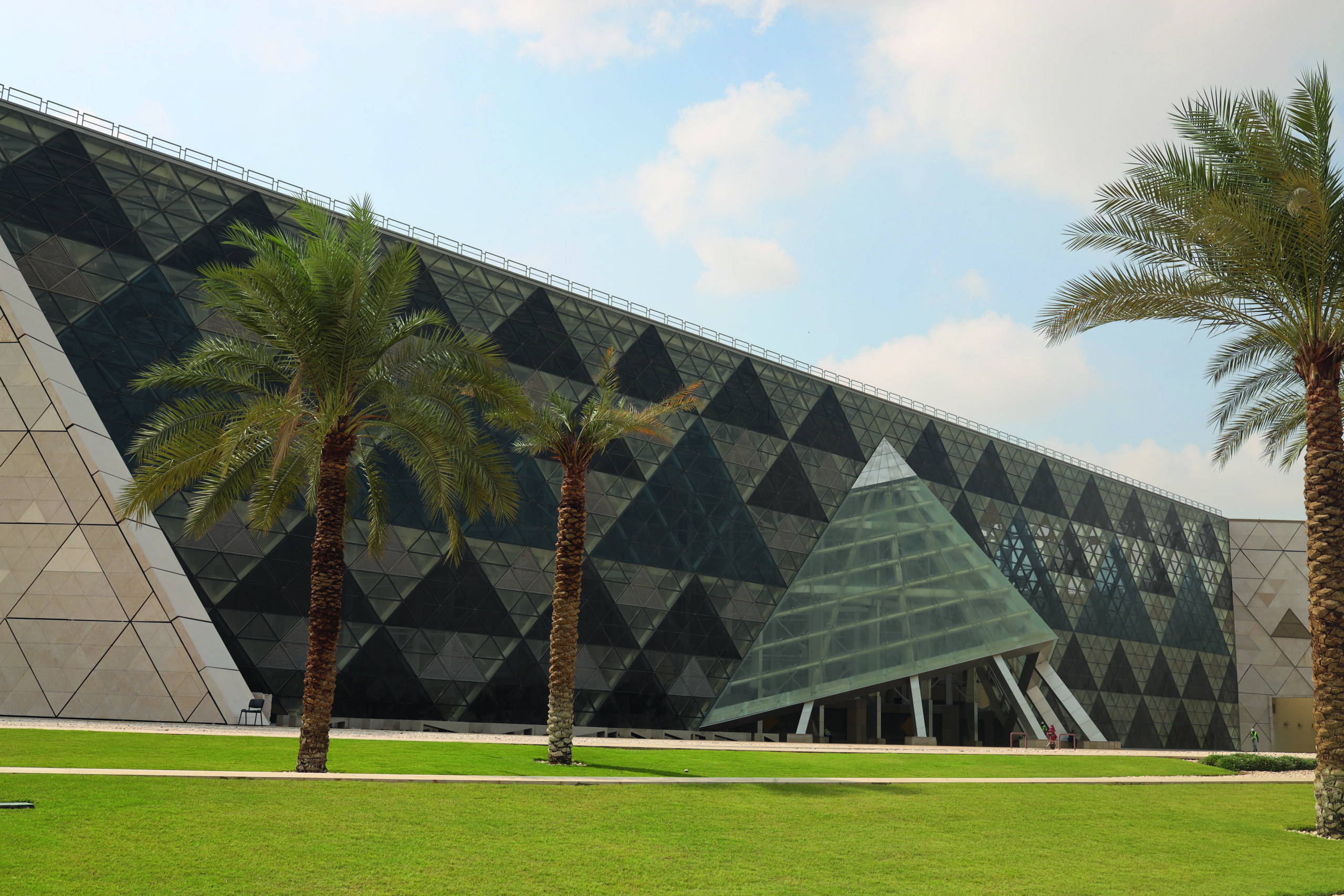
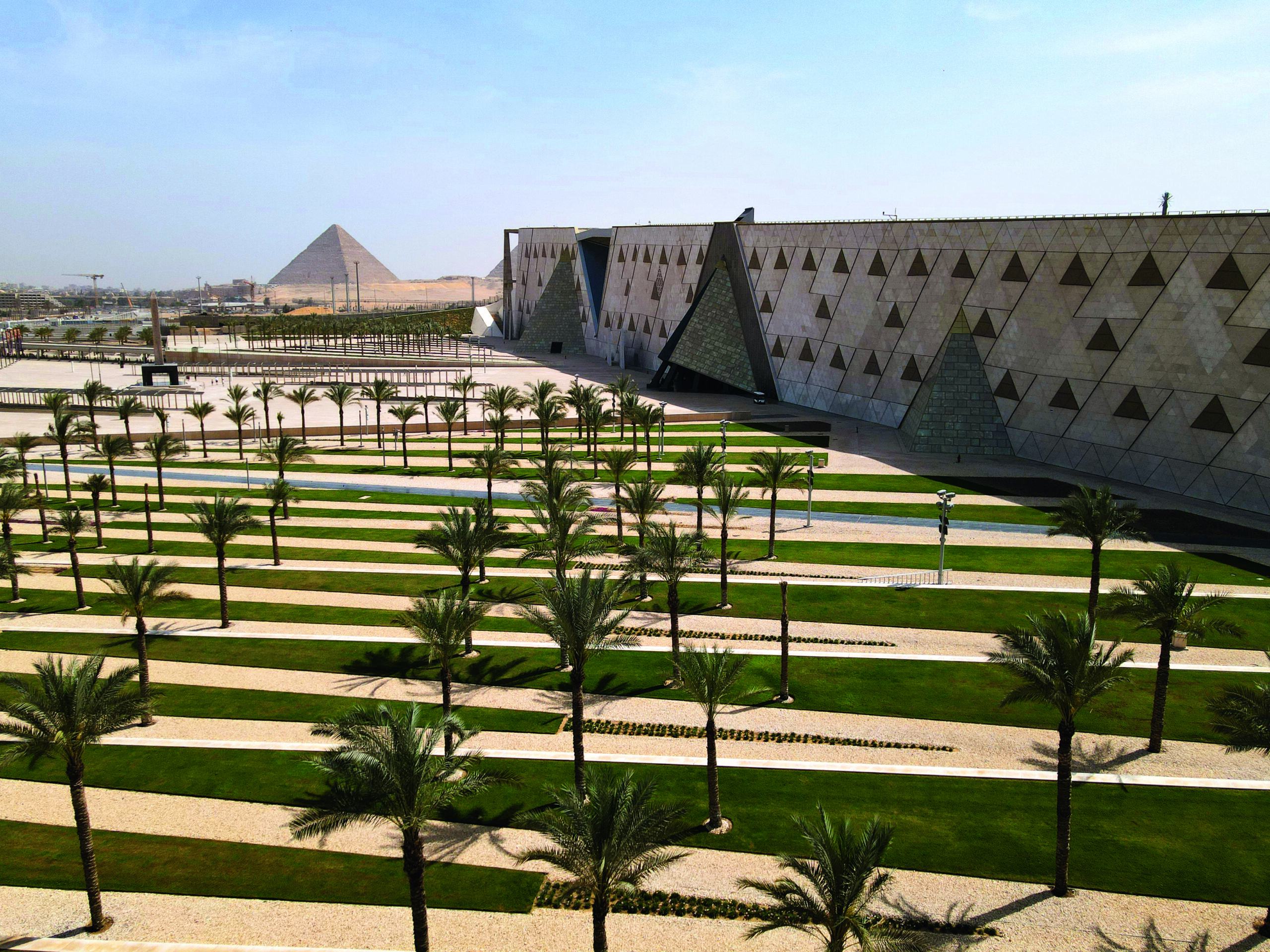
 In addition to exhibition spaces, the complex includes a children’s museum, research centre, conference rooms, laboratories, catering facilities and open gardens. Heneghan Peng Architects’ design harmonises with the ancient heritage of the site down to the smallest detail. For example, the building is positioned within an ingenious network of sightlines to the three pyramids of Giza, located a short distance away. From a central point behind the museum, the lines run to the tops of Cheops and Mykerinos. The main building itself is a truncated triangle: the north and south walls converge, and the sloping roof follows the slope of Chefren. This subtle geometry seamlessly connects the museum and monuments, while the spaces are organised in an unexpected way.
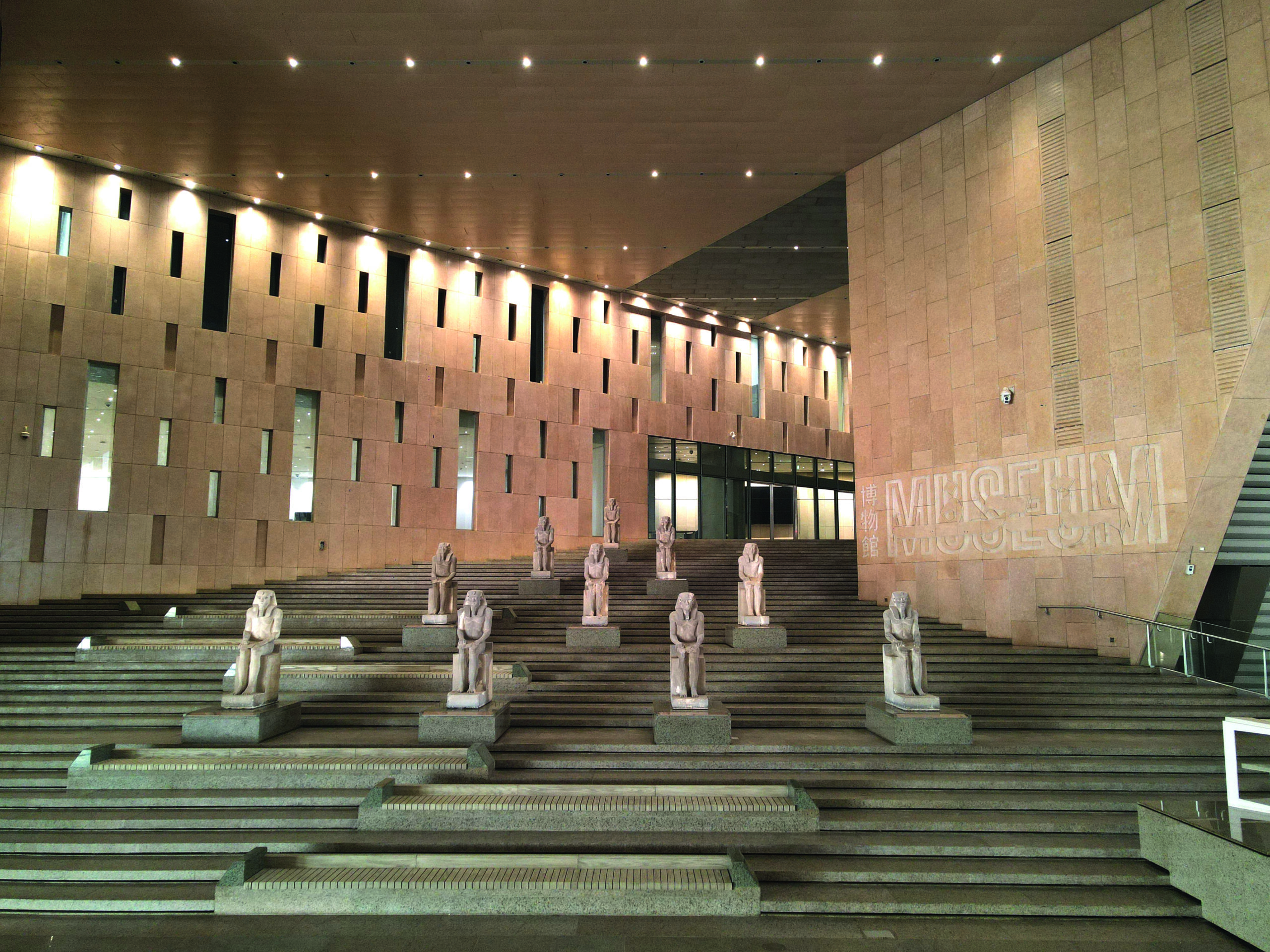
Designed as a monumental concrete wedge, the GEM follows the natural lines of the landscape: balancing on the edge of the Nile Delta and a desert plateau. In the museum’s interior, the triangle recurs throughout: in the inverted pyramid-shaped pillars at the main entrance, resembling giant stilettos, and in successive floors leading to the permanent collections via the central staircase. The higher you climb, the deeper you delve into history. The top rewards with a panoramic view of the pyramids: the circle – or rather triangle – is complete.
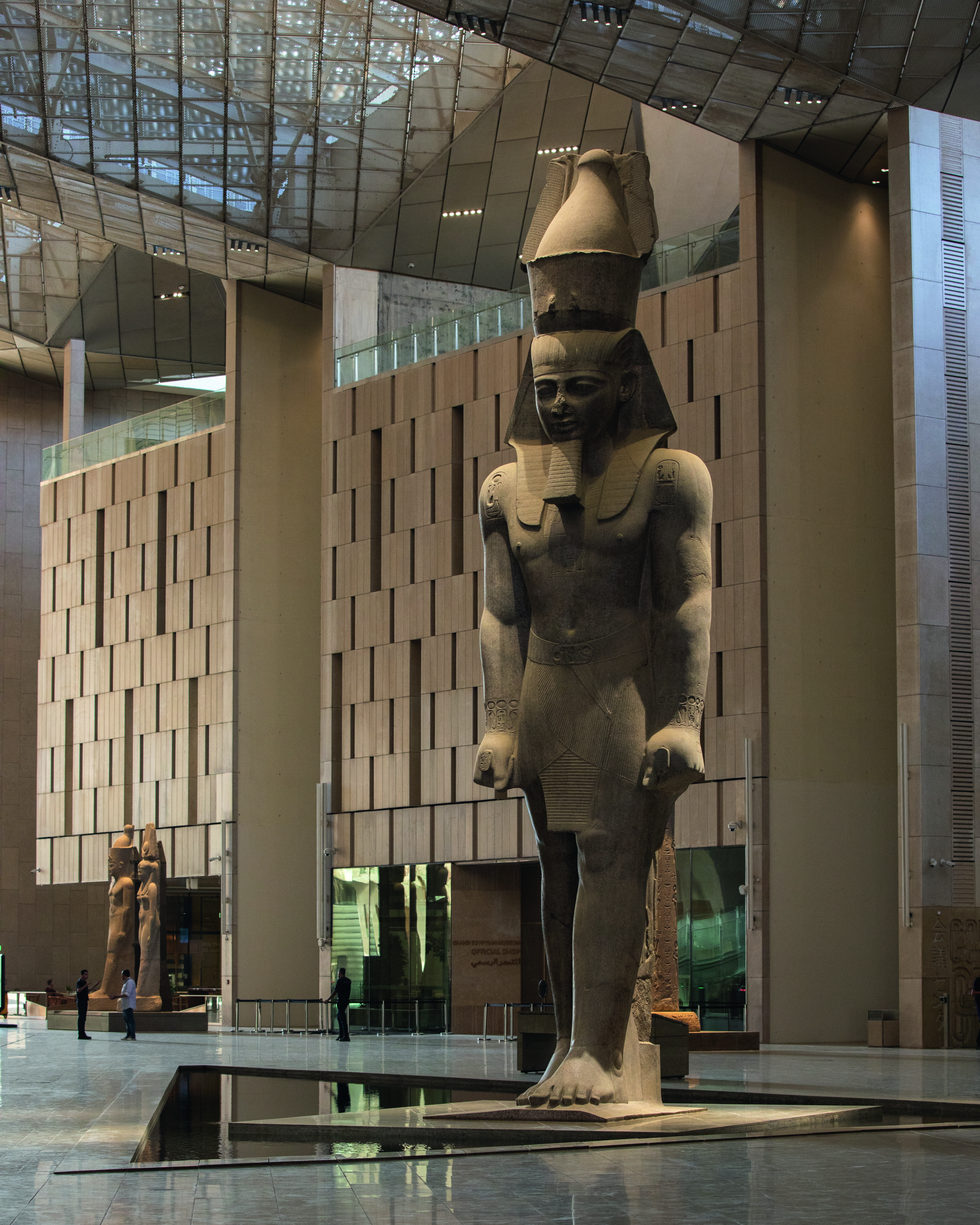
The GEM is home to thousands of archaeological treasures, including the famous Tutankhamun collection, the 4600-year-old solar boat of Cheops along with countless Pharaonic artefacts that are now on public view for the first time. It is nearly poetic, these wonders of the past continue to inspire extraordinary achievements today. The ancient Egyptians were masters of technical ingenuity, setting the bar high for this modern structure. The play of light around Ramses II, for example, seems magical, but is the result of ingenious folds in the roof, an enormous concrete slab, which allow sunlight to filter through in exactly the right place, as if the sun god himself were involved. And so, millennia after the pharaohs displayed their divinity in monumental buildings, modern builders are once again reaching for the stars.